


















Back
Back
Back
Back





How can manufacturers find a balance that satisfies the need to both sell as much as possible without incurring the costs of holding excess stock of their products? The answer is simple: Sales & Operations Planning (S&OP). Sales & Operations Planning is an enterprise-wide integrated management process that seeks to align each business function to the goal of balancing demand and supply and achieving profitability. It is an executive statement of desired business output based on recommendations of the various departments, including Sales, Marketing, Planning, Finance, Procurement, Manufacturing and Supply Chain.
Because the way in which a company manage its Sales & Operations Planning process can have a big impact on the productivity and profitability of the business as a whole, many smart manufacturers today are turning to technology to help them better control, oversee, synchronize and optimize their Sales & Operations Planning, from start to finish. Successful S&OP software applications include and connect a multitude of functionalities, including:
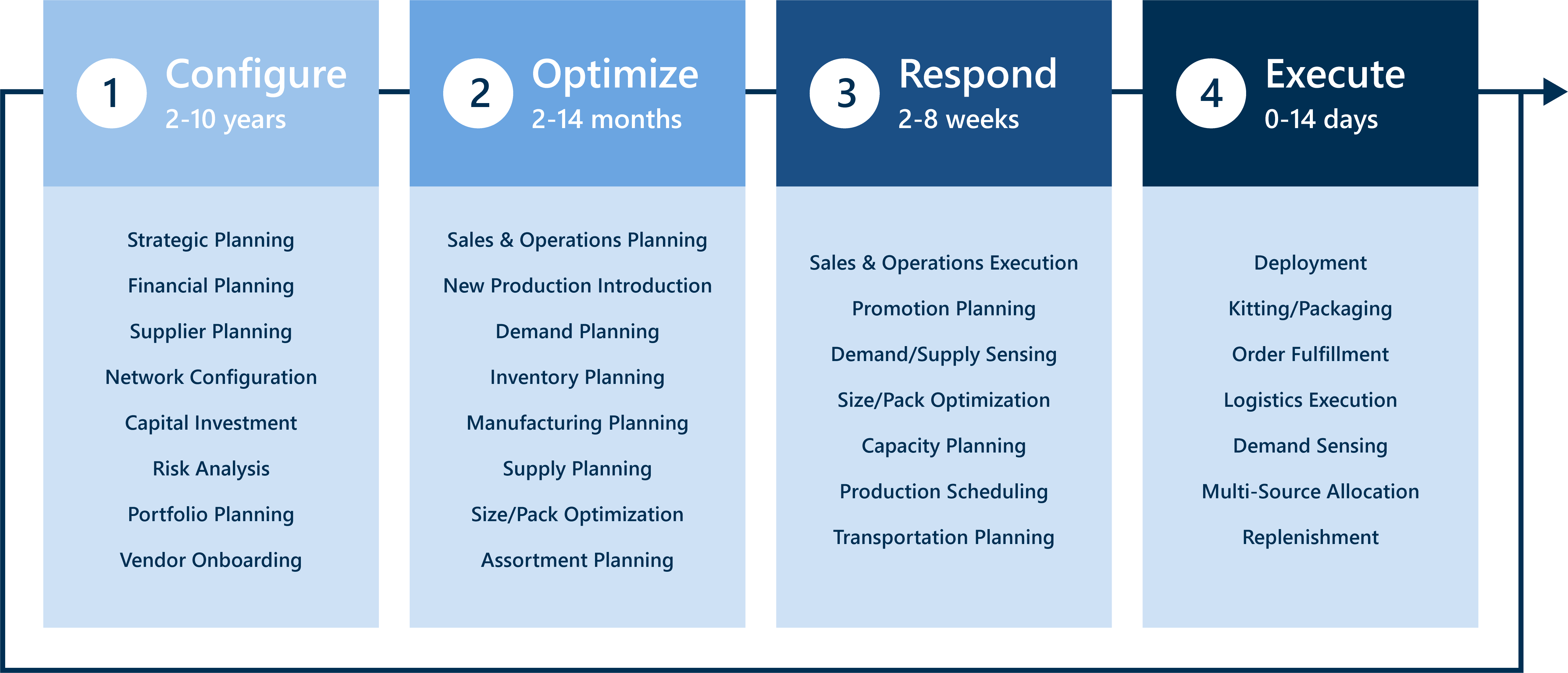
A Multi-Horizon Digital Approach to Enterprise Planning & Optimization
Departments Involved: Demand Planning, Sales, Marketing
Inputs: Historical Sales Data, Sales Budget, Market Trends
Output: Consensus Forecast
Demand Forecasting is the estimate of expected customer demand based on historical sales data. Demand Forecasting sets the push processes of supply chain management in motion, including raw material planning, material purchasing and logistical planning. Demand Forecasting sets the baseline for Demand Planning, which involves all the manual activities performed by demand planners to reach a consensus forecast. Successful solutions for Demand Forecasting and Demand Planning enable and facilitate the following activities:
Departments Involved: Production Planning, Purchasing, Logistics
Inputs: Consensus Forecast, Customer Orders, Inventory Policies, Inventory Levels
Output: Replenishment Plan
Inventory Planning uses advanced modeling techniques to help manufacturers balance product inventory and costs against customer service level goals. Having an inventory that is too lean puts the enterprise at risk of missing customer service targets; having an excessive inventory reserve puts the enterprise at risk of excessive costs and waste. Inventory Planning solutions help to find the ideal balance. Successful solutions for Inventory Planning enable and facilitate the following activities:
Departments Involved: Supply Chain Planning, Production Planning
Inputs: Replenishment Plan, Stock Levels, Bill of Materials, Production Constraints
Outputs: Purchasing Plan, Production Plan
Supply Chain Planning solutions leverage Digital Twin simulation modeling capabilities to map an enterprise’s supply chain network and automate capacity and fulfillment decisions. When your supply chain matches your most profitable options with the lowest-cost ways to satisfy requirements, you can accelerate your progress towards profitability goals. Successful solutions for Supply Chain Planning enable and facilitate the following activities:
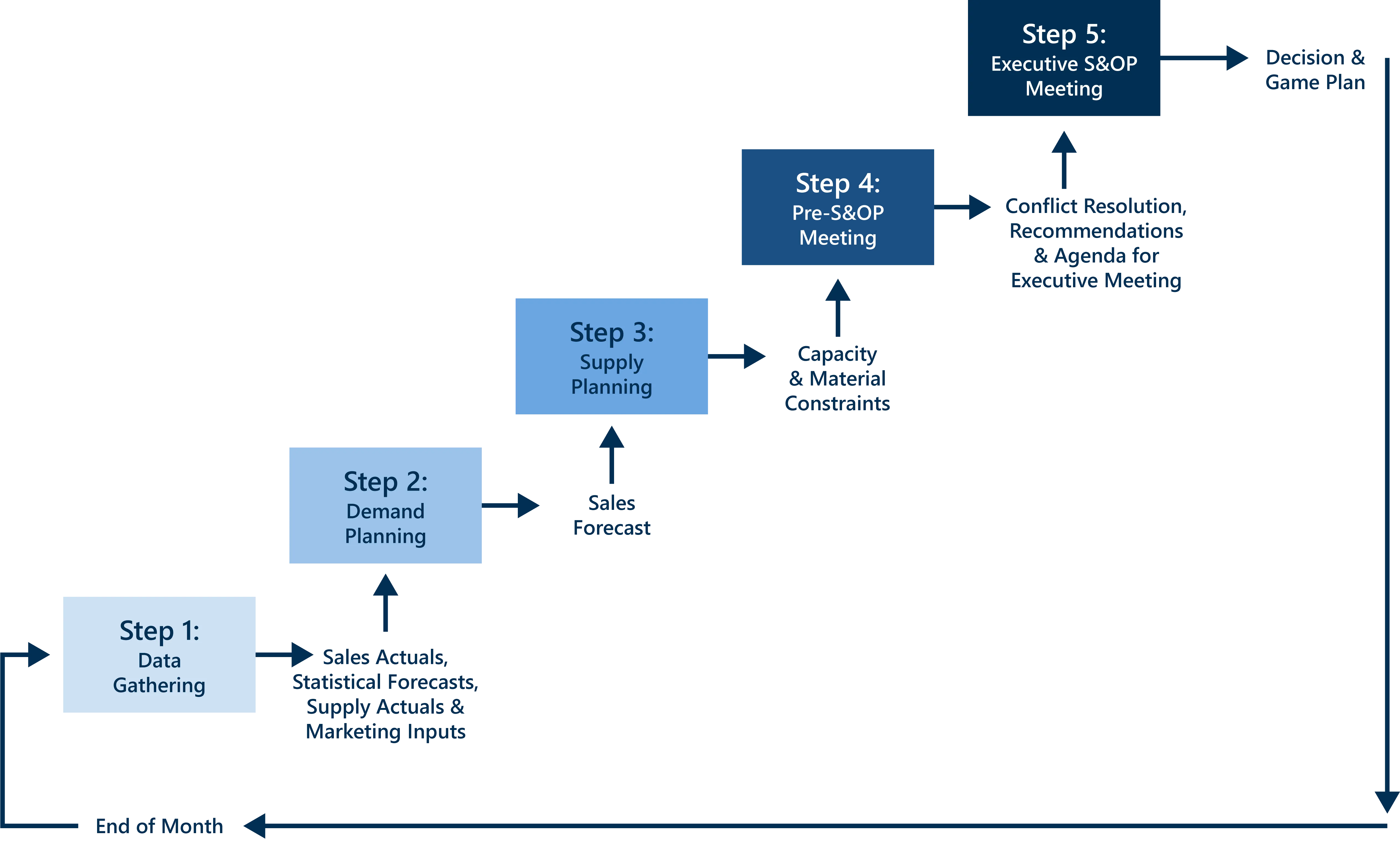
A Holistic Sales & Operations Planning Process
Sales & Operations Planning aims to bring order to the chaos of the marketplace. It enables manufacturers to be proactive, rather than reactive, to changes in the business environment. While many organizations continue to manage their Sales & Operations Planning activities in a disorganized and disjointed way, many others are turning to digitalization and seeing significant transformation and benefits as a result.
Successful solutions for S&OP result in:
With a global practice and team of resources dedicated to Sales & Operations Planning for Industry 4.0, IndX is one of the few companies in the world with the business process knowledge, technical expertise and implementation experience needed to streamline, synchronize and optimize even the most complex and unpredictable supply chains for customers across all industrial sectors worldwide.