
















Back
Back
Back
Back


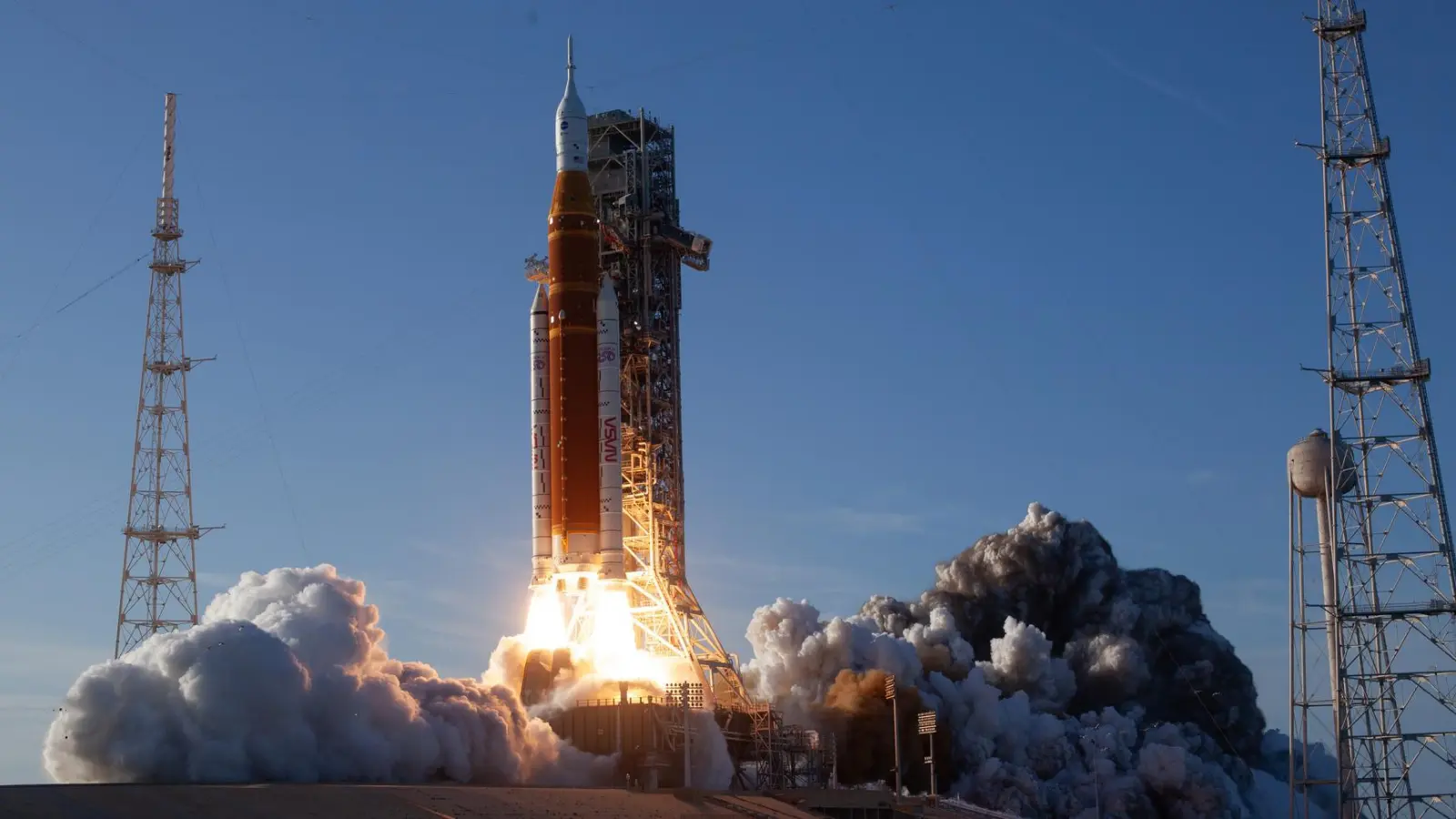
Four astronauts. 694,000 miles. Zero margin for error.
IndX partnered with EaglePicher Technologies to engineer the Orion crew module's battery system for Artemis II, NASA's first crewed lunar mission in over half a century.
EaglePicher Technologies has manufactured mission-critical battery cells and energetic devices for more than 80 years. The company's products power systems across aerospace, defense, and military aviation, in applications where reliability is not a preference but a prerequisite. EaglePicher's core expertise is in electrochemistry: its engineers design the cells themselves, the chemical heart of every battery. But when a program requires full system-level design, including the structural housing, thermal management, and mechanical integration that turn individual cells into a deployable battery assembly, the company relies on specialized engineering partners.
When the mission changes, the battery starts over.
The Artemis program is NASA's effort to return humans to the Moon and build toward eventual crewed missions to Mars. The Orion Crew Exploration Vehicle sits at the center of that program: a spacecraft designed to carry astronauts beyond low Earth orbit, around the Moon, and safely home.
Orion's battery system is not a secondary component. It provides electrical power to the crew module. As Dan Grabowski, Director of Engineering Automation at IndX, described it:
"This battery is built for the crew capsule, so there's human beings alive in this thing. The real objective is to reduce the risk of loss of life."
The margin for failure on this program was not measured in downtime or lost revenue. It was measured in lives.
When EaglePicher received the contract to manufacture the Orion battery, the scope of the challenge became clear quickly. NASA's requirements flowed down through Lockheed Martin, the prime contractor, and they were exacting. The battery assembly had to fit within a fixed structural envelope, a defined physical space on the spacecraft that could not be exceeded by a single millimeter. It had to meet strict weight limits, where every fraction of a pound was treated as consequential.
"If it takes $10,000 worth of engineering time to figure out how to shave a tenth of a pound of weight off this box, the program will fund it. That is the level of precision that's required."
The battery also had to manage thermal performance in an environment where the normal rules do not apply. On Earth, electronics shed heat into the surrounding air. In space, there is no air. The only way to reject heat from the battery is through a cold plate: a metal surface with refrigeration lines running through it, mounted directly to the spacecraft structure. The entire battery housing had to be designed so that each cell and electronic component maintained proper thermal contact with that cold plate, keeping temperatures within a narrow operating window throughout the mission.
Beyond size, weight, and thermal performance, the design also had to account for conditions unique to spaceflight: structural loads during launch, sealing against the vacuum of space, electromagnetic interference, and exposure to solar radiation.
EaglePicher's engineers are specialists in electrochemistry and cell design. But this project required mechanical engineering, structural analysis, and thermal analysis at the full system level, capabilities the company did not have in-house. They needed a partner with deep engineering design expertise, experience in aerospace battery systems, and the ability to stay embedded in a program that would demand sustained, iterative collaboration over years.
IndX had already built that relationship. Through prior aerospace battery projects with EaglePicher's predecessor organization (Yardney), IndX's design automation team had established a track record strong enough that a competitive bid was unnecessary. The work was awarded directly.
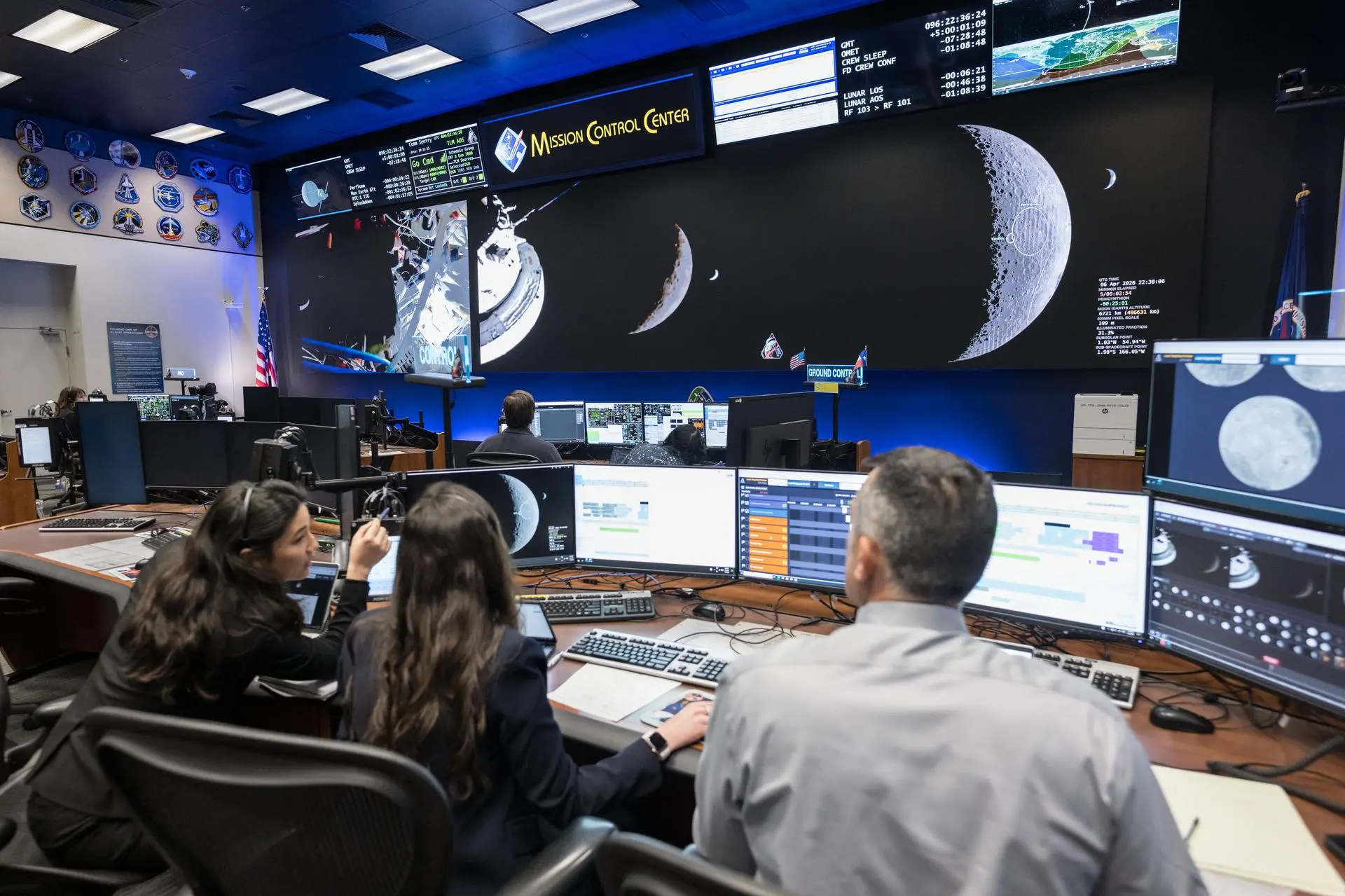
Four builds. Seven years. One mission.
The Orion battery project began in 2008 and spanned approximately seven years of active development. Over that period, IndX's Design Automation engineers worked as an integrated extension of EaglePicher's team, responsible for the full mechanical design and analysis of the battery system assembly.
The scope of IndX's work covered three core deliverables: engineering design of the battery casing and bracketry, structural finite element analysis (FEA), and thermal FEA. Using SolidWorks for CAD modeling and Ansys for structural and thermal simulation, IndX engineers determined how to arrange and secure the cells within the allowed space. This included cell orientation, mounting, electronics routing, and ensuring the entire assembly met Lockheed Martin's structural envelope and weight requirements while maintaining proper thermal contact with the spacecraft's cold plate.
The work followed NASA's formal engineering process. At key milestones, IndX presented its design and analysis findings in Preliminary Design Reviews (PDRs) and Critical Design Reviews (CDRs), held on-site at EaglePicher's facility with NASA and Lockheed Martin representatives present. These were full-day sessions, rigorous, formal, and consequential. Every design decision had to be defended with analysis.
But the defining characteristic of this project was its iterative nature. The Artemis program was not static. As NASA refined the mission architecture and Lockheed Martin updated vehicle-level requirements, the specifications for the battery system shifted, sometimes substantially.
"We probably designed this thing from start to finish three or four times. Because the loads are changing, the parameters are changing. I would hear, 'Oh hey, this piece took up more space on this thing, so now you have less space,' and the weight requirements are different. Each change triggered a new cycle of design, analysis, and manufacturing."
Each cycle meant rebuilding the model, rerunning structural and thermal analyses, presenting updated findings in formal design reviews, and carrying the revised design through to manufacturing-ready documentation. Each iteration incorporated lessons from the previous build, and each had to account for the manufacturability of the design. Features like thin-walled pockets had to be verified as machinable on the shop floor before a design could move forward.
The final deliverables included a complete set of 3D models, formal engineering drawings, manufacturing build instructions, and comprehensive structural and thermal analysis reports.
Designed the complete battery system casing and bracketry based on EaglePicher's cell designs, optimized for a fixed structural envelope, strict weight limits, and thermal contact requirements
Conducted structural and thermal finite element analysis (FEA) to validate performance across launch loads, vacuum conditions, and thermal cycling
Presented design and analysis findings in formal Preliminary Design Reviews (PDRs) and Critical Design Reviews (CDRs) with NASA and Lockheed Martin stakeholders
Executed four complete design-build-analyze cycles in response to evolving program requirements over approximately seven years
Delivered manufacturing-ready models, drawings, build instructions, and analysis reports for the final battery system configuration
Assessed design for manufacturability throughout every iteration, ensuring all features could be produced on the shop floor
The battery assembly had to fit within a space defined by Lockheed Martin with zero tolerance for deviation
Every fraction of a pound mattered enough to justify significant additional engineering effort
Heat rejection through a cold plate with no convective cooling, requiring precise thermal contact design
The battery powers the crew module carrying human beings; failure is not an operational risk but a life-safety risk
Shifting NASA specifications drove four full redesign and rebuild cycles across the life of the project
Every structural feature had to be producible, with machinability validated alongside performance
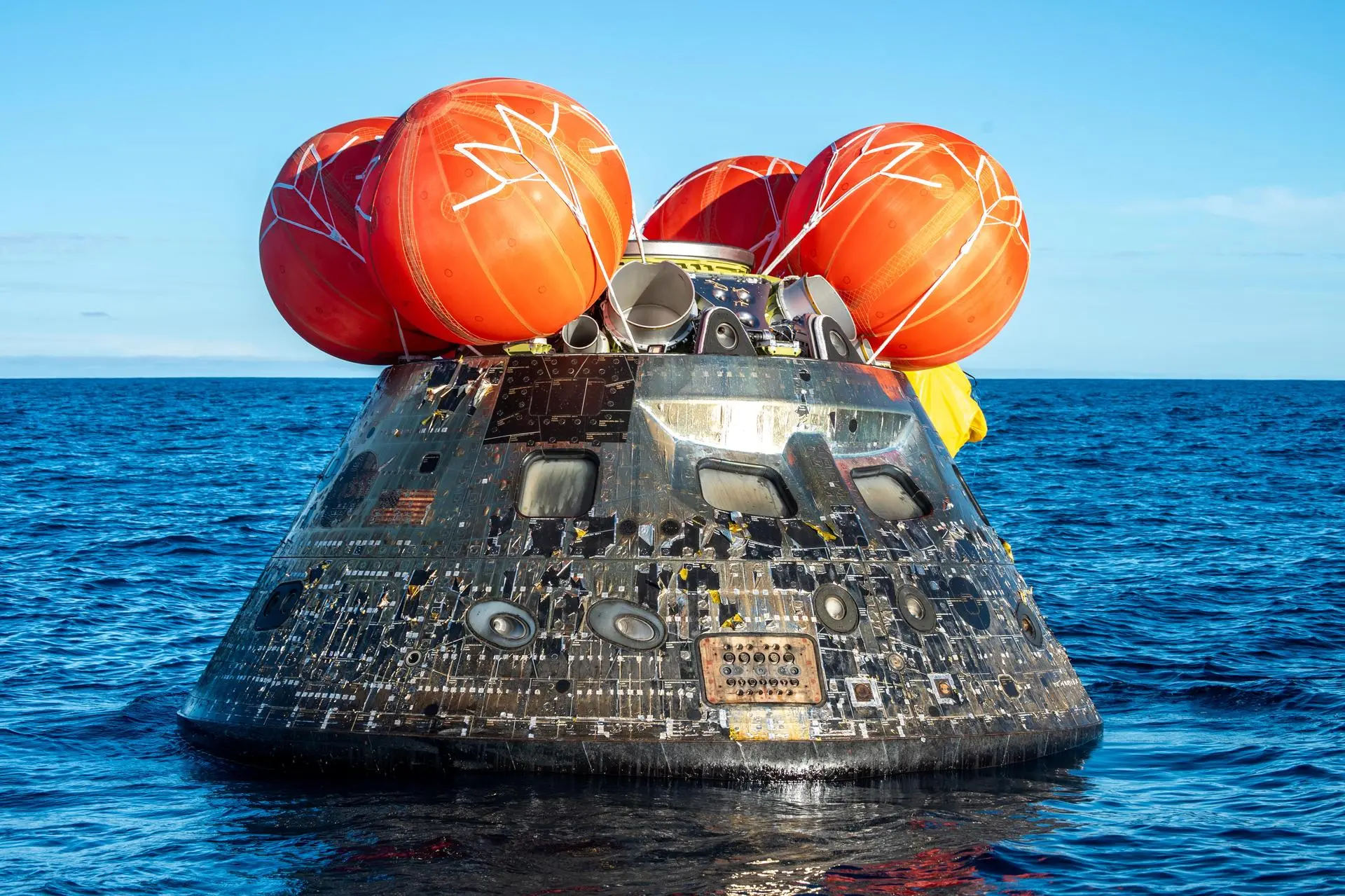
The problem few firms could solve.
What made this project distinctive was not just the technical difficulty of any single design cycle, but the sustained complexity of staying embedded in a program that kept moving.
Each time NASA updated its requirements (a revised weight budget, a change to the available space, an updated thermal profile), the engineering response was not a patch or an adjustment. It was a redesign from the ground up. New models, new analyses, new manufacturing documentation, new formal reviews. Four times over, with the same rigor applied to the fourth iteration as the first.
IndX was originally selected because of a long-standing relationship with EaglePicher's predecessor organization and a proven track record on aerospace battery projects. But the reason the engagement lasted seven years was not the relationship alone. It was the depth of capability. The project required engineers who could design a system-level battery assembly, conduct structural and thermal FEA under space-grade requirements, factor in manufacturability at every step, and defend every decision in formal reviews with NASA and Lockheed Martin in the room. That combination of mechanical design, simulation, manufacturing awareness, and aerospace rigor is not widely available.
The Orion battery project also reflects the broader reality of how crewed spaceflight programs operate. Requirements are never truly locked. They evolve as the vehicle matures, as mission architecture changes, and as integration decisions ripple through every subsystem. The engineering teams working at the component level must be prepared to absorb those changes without compounding risk, without losing traceability, and without slowing the program.
IndX was not selected for this project through a competitive procurement. The company's Design Automation engineers had already proven their capability on prior aerospace battery programs with EaglePicher, and the relationship was strong enough that the contract was awarded directly.
"The customer never told us, 'We need to send out three quotes just to do our diligence.' It was just, 'No, you got the job.'"
That kind of trust is earned through a specific combination of capabilities: deep mechanical engineering and simulation expertise, direct experience with aerospace battery systems, an understanding of the manufacturing constraints that govern what can actually be built, and a willingness to stay engaged through the full lifecycle of a complex, evolving program.
For IndX, this project reflects a core principle that has defined its Design Automation practice for decades.
"We don't want to just do work for work's sake. We want the hard, challenging problems. That's where we excel."
The Orion battery system was exactly that: too difficult, too specialized, and too consequential to commoditize.
As the Artemis program moves forward, with Artemis III targeted for crewed lunar orbit operations and surface missions planned in the years ahead, the engineering demands on every subsystem will only increase. IndX's contribution to the Orion crew module battery is one part of a much larger story, and it is the kind of work the company was built to do.
